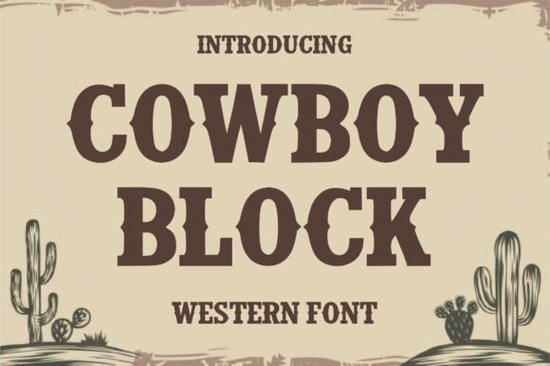
If you’re working on a project that needs to feel rugged, nostalgic, or just plain fun with a Western twist, Cowboy Block Font is worth a closer look. It’s not trying to be fancy or delicate it’s built for impact. With thick block serifs and those little decorative spurs sticking out like cowboy boots at a saloon door, this all-caps display font brings instant character to anything from t-shirt designs to vintage posters. Whether you’re designing merch for a country band, signage for a BBQ joint, or labels for handmade goods, this font delivers that authentic frontier vibe without needing extra graphics or effects.
What kind of projects does Cowboy Block work best for?
This isn’t a font you’d use for body text or minimalist branding. It’s made to shout politely, but loudly. Think:
- Wanted posters the kind you’d actually want to hang on your wall
- Restaurant menus or chalkboard signs for steakhouses, breweries, or roadside diners
- T-shirts, hats, and patches for outdoor brands, rodeos, or music festivals
- Album covers or event flyers for country, folk, or Americana acts
- Product packaging for hot sauce, jerky, coffee, or craft spirits
Because it’s condensed and bold, it holds up even when scaled down or printed small. And since it’s all uppercase, pairing it with a clean sans-serif (like something from this modern vintage collection) gives you balance without losing that rustic charm.
How does it compare to other display fonts?
Not every “Western” font nails the look without veering into cartoon territory. Cowboy Block keeps things grounded literally. The letterforms are sturdy, not exaggerated. The spurs add flair without overwhelming the shape. If you’ve tried fonts like Summer Forever for beachy vibes or Kidpop for playful energy, you’ll notice Cowboy Block sits in a totally different lane: it’s got grit, not glitter.
It also plays nicely alongside more stylized fonts if you need contrast. Try layering it with Bubble Skelly for a spooky-western mashup, or The Pickles House if you’re going for quirky nostalgia. Just don’t pair it with another heavy serif they’ll fight for attention.
Is it easy to use for beginners?
Absolutely. There’s no learning curve here. Install it like any other font, fire up your design software, and start typing. Since it’s all caps, you don’t need to worry about lowercase spacing or stylistic alternates unless you’re digging into OpenType features (which, honestly, you probably won’t need for most projects). Even if you’re new to design tools like Canva, Silhouette Studio, or Adobe Illustrator, this font behaves predictably. No weird kerning surprises or overlapping elements.
One tip: give it breathing room. Because the letters are so bold and condensed, tight spacing can make words feel cramped. A little extra tracking (letter spacing) goes a long way especially for headlines or logos.
Can I use it commercially?
Yes and that’s a big reason why print-on-demand sellers and small business owners love it. Once you download it from Creative Fabrica, you’re cleared to use it on physical products you sell, digital templates, client work, and even merchandise. No extra licenses or fees. That makes it a smart pick if you’re building a brand around rustic, Americana, or cowboy themes and want to keep costs predictable.
Just remember: while you can use the font commercially, you can’t resell or redistribute the font file itself. Pretty standard stuff, but always good to double-check if you’re working with clients or collaborators.
What should I avoid when using this font?
Don’t force it where it doesn’t belong. This isn’t the font for:
- Elegant wedding invites
- Corporate annual reports
- Minimalist tech branding
- Long paragraphs or mobile app UI
And while it looks great at large sizes, avoid shrinking it below 12pt for print or 16px for web those decorative spurs will blur together, and readability tanks. Also, skip the drop shadows or heavy outlines unless you’re going for an intentionally campy poster look. The font has enough personality on its own.
Ready to try it? Grab Cowboy Block and start experimenting. Pair it with a neutral background, maybe some wood grain or faded paper texture, and let the letters do the talking.
Quick checklist before you start:
- Use it big headlines, logos, posters
- Add space loosen tracking slightly for better legibility
- Pair wisely combine with simple sans-serifs or handwritten styles
- Avoid overuse one strong headline beats three competing ones
- Test prints check how those spurs hold up in small sizes or low-res outputs
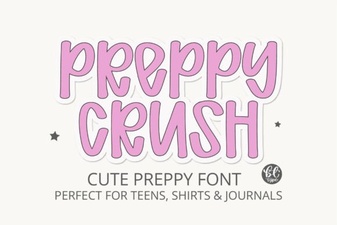 Preppycrush Font: Style & Download Guide
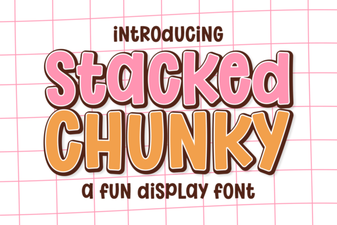 Chunky Fonts: Bold Design for Strong Visual Impact
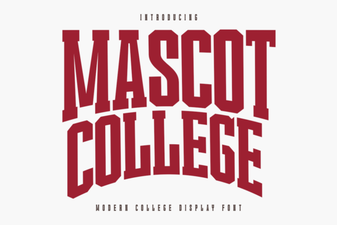 The Mascot College Font: Design & Project Guide
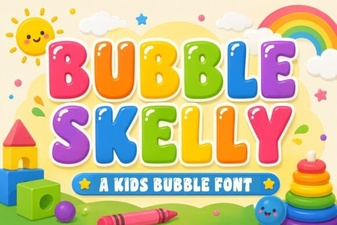 Bubble Skelly Font for Creative Typography Projects
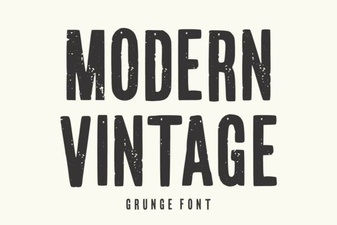 Modern Vintage Fonts: Design with Timeless Style
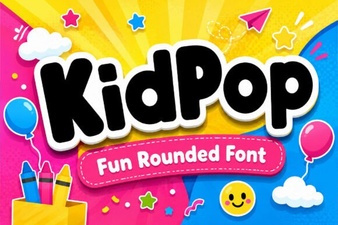 Kidpop Fonts for Creative Projects & Designs