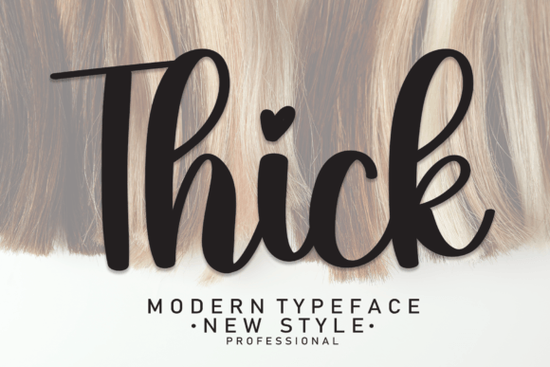
If you’ve been searching for a bold, eye-catching script that still feels personal and handcrafted, the Thick Font might be exactly what your next project needs. It’s not overly ornate or hard to read just clean, confident lettering with enough weight to stand out on posters, packaging, or social media graphics. Whether you’re designing wedding invites for a client or branding your Etsy shop, this font brings warmth without sacrificing clarity.
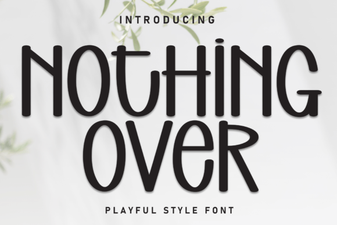
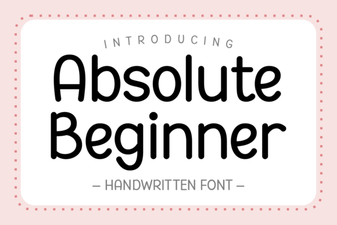
What makes it especially useful is how well it scales. You can blow it up for wall art or shrink it down for product labels, and the strokes hold up beautifully. That kind of versatility is rare in handwritten-style fonts, which often lose their charm at smaller sizes. If you’ve tried fonts like Absolute Beginner or Nothing Over and liked their casual vibe but wanted something bolder, Thick sits right in that sweet spot.
What kinds of projects work best with this style?
Because of its solid, rounded forms and smooth curves, Thick performs well in both print and digital spaces. Here are a few real-world uses where it shines:
- Wedding stationery invitations, menus, place cards
- Social media branding logos, quote posts, story overlays
- Product packaging coffee bags, soap labels, boutique candles
- Wall decor canvas prints, vinyl decals, nursery signs
- Merchandise tote bags, mugs, T-shirts (especially for POD sellers)
It’s also surprisingly readable as a watermark or subtle background element something not every thick script pulls off. For comparison, try pairing it with something lighter like Overthinker for contrast in layered designs.
How does it compare to other handwritten scripts?
Not all script fonts play nice with commercial use or high-resolution printing. Some feel too stiff, others too messy. Thick avoids both pitfalls. The letterforms have just enough bounce to feel human, but they’re consistent enough to look professional when repeated across a product line.
If you’ve used Smithson before, you’ll notice Thick has more heft better for headlines than body text. And if you’re coming from something ultra-delicate like Autography, this will feel refreshingly sturdy. It doesn’t scream for attention; it just holds space confidently.
One thing worth noting: while it’s labeled “handwritten,” don’t expect sketchy imperfections. This is a polished, intentional design think calligraphy marker, not pencil doodle. That makes it safer for client work where legibility matters.
Any tips for using it effectively?
A little goes a long way. Because the strokes are heavy, spacing is key. Don’t cram letters together give them room to breathe, especially in all-caps layouts. Pair it with a simple sans-serif (like Montserrat or Lato) to keep things balanced.
Also, avoid using it for long paragraphs. It’s meant to headline, not narrate. Stick to short phrases: names, taglines, calls to action. In mockups, try setting it against textured backgrounds kraft paper, linen, marble where its soft edges can contrast nicely without clashing.
If you’re prepping files for print-on-demand platforms, double-check kerning in your design software. Some auto-kern settings can squash the letters too close. Manual tweaks take five minutes but make a huge difference in final quality.
For deeper context on how fonts like this fit into modern branding, you might want to check out Thick directly on Creative Fabrica they often include stylistic alternates and ligatures that aren’t obvious in preview images.
Who should skip this font?
If your project needs something ultra-minimalist, corporate, or strictly geometric, this isn’t the right pick. It’s got personality which is great unless you’re going for sterile neutrality. Also, if you need support for Cyrillic, Greek, or extended Latin characters, verify the character set first. Most versions cover standard Western languages, but always good to confirm.
Likewise, if you’re working on tiny UI elements (like app buttons or fine-print footers), consider a thinner alternative. Even though Thick scales decently, there’s a lower limit where details start to blur on low-res screens.
Quick checklist before you download:
- ✅ Check licensing Make sure it covers your intended use (personal, commercial, merch, etc.)
- ✅ Preview alternates Many script fonts include swash letters or contextual variants
- ✅ Test readability Paste your actual copy into a mockup before committing
- ✅ Pair wisely Choose a complementary font for secondary text
- ✅ Save a backup Always keep the original .otf/.ttf file in case you need to reinstall
Fonts like this don’t need hype they just need to work when you open your design file. If you’re tired of flimsy scripts that vanish at small sizes or rigid fonts that feel robotic, give Thick a try. Sometimes the right tool is the one that doesn’t get in your way.
Download Now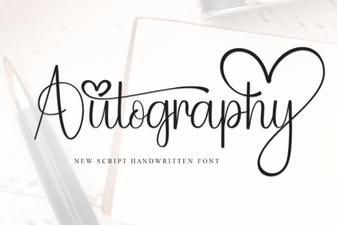 Autography: the Designer’s Signature Font
 Script Fonts to Elevate Your Creative Projects
 Creative Font Pairing Ideas for Your Design Projects
 Free Monday Font: Improve Your Project Design
 Beautiful Butterfly Fonts for Creative Projects
 Fonts for Your First Creative Projects